What is truth?
An exploration...

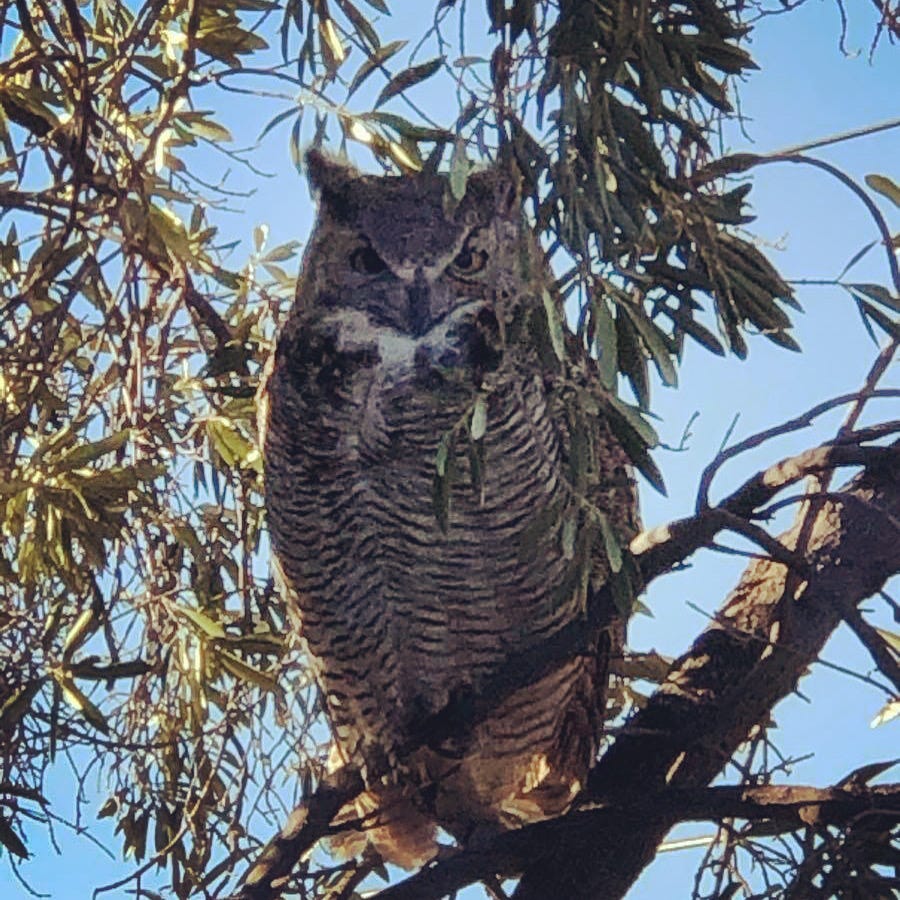
The owl, in ancient Greek mythology, was the totemic bird of Minerva, goddess of wisdom. “Wisdom” is part of the word philosophy, which, translated literally, means “love of wisdom.” You are right to think that wisdom would have to bear some relation to truth. The question before us—What is truth?—has a very long history, so discussing it will require at least three installments. Here goes:
I’ve always liked the German word for ‘truth:’ Wahrheit. It connotes solidity or fixity. But I take these qualities to suggest not some sort of permanence or unchangeability; rather truth is the reachable or determinable
That is, truth is what can be known. To put it another way: you can’t be said to know unless what you claim to know is the truth. If the truth is what can be known, then, there’s nothing short of knowledge that will count
“Belief,” other words, is not only unnecessary to knowledge, it’s contrary to knowledge. You not only don’t need to believe in order to know, you will have settled for not knowing by resorting to belief
There as many forms of truth—that is, ways of knowing—as there are forms of life; I’ll start with this range: the personal, the historical, the logical, and the scientific
I’ll treat the social and political as aspects of the first two
Think, first, about “telling the truth.” Notice that there is no verb for doing this. In every language—including English—there are many verbs for forms of lying, i.e., not telling the truth. But there are no verbs. Why? Because the act of telling the truth is so rare.
The great British playwright Harold Pinter once remarked that “language is a device for concealing from others what we mean.” If we agreed with Pinter, our default aim when speaking is to lie or conceal.
This is perhaps too strong, but Pinter was a dramatist after all: the primary condition for drama is conflict. Unless there is conflict, there’s no story. And what entails more conflict than the discovery that one of us has been lying? All stories are about discovering or uncovering some truth
So—on this account so far—when I say in conversation “I believe you,” I am agreeing not to search any further for what might be known, that is, for the truth
When I agree to believe rather than continue to search or to press for truth, I do so for social reasons: by allowing concealment I recognize that I have things to conceal as well. Being thus “polite” is a widespread moral instruction.
It makes for the force of Hans Anderson’s story The Emperor’s New Clothes [1837]. The story opens: “…There was once an emperor so exceedingly fond of new clothes that he spent all his money on being well dressed…” Then two strangers show up promising especially fine garments with a magical property: they cannot be seen by the unfit or the stupid…
You know what happens: a father with a young son on his shoulders is in the crowd invited to appreciate the leader in his new finery; everyone applauds the sight except for the child, who shouts, “The emperor has no clothes!”
Do the people welcome this expression of an obvious truth? No: they criticize the child! The point is clear: we’re more likely to defend our desires than to insist upon discovery
The truth is not always so obvious, of course. It’s just always dangerous to the image I have of myself or wish to project. Children have to learn this. Until they do, they frequently insist upon asking more questions
Once again, questions are central both to philosophy and to the concern for truth, even in our personal affairs, though we are usually not courageous enough, or innocent enough, to pursue them…
TO BE CONTINUED…