What is "knowledge?"
"The search for knowledge is the highest human attribute. Those who most loudly claim it are the ones who make the least effort." Albert Einstein [1889-1955]

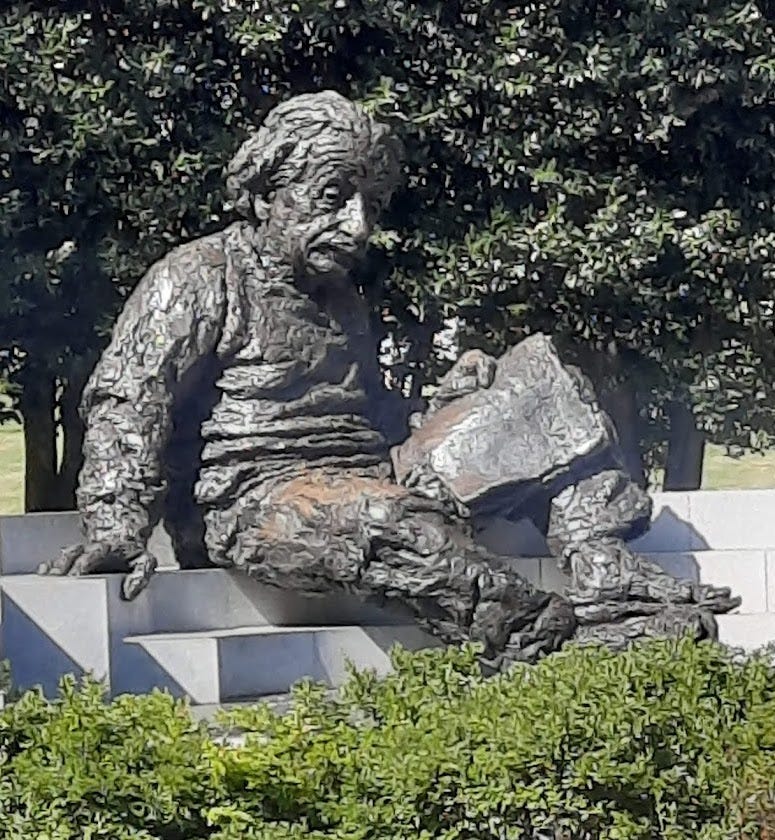
Knowledge is not to be confused with something “absolute” like certainty
Those who wish to be certain are not interested in knowledge; they are aiming for something else; to wish to be certain is to wish to be finished, to be comfortable or safe
Knowledge is neither comfortable nor safe: this is because it is an enterprise, an activity rather than a goal
The enterprise—what Einstein, quoted above, called a “search”—requires me to engage with what is, to be open to discovery and to the experience the philosopher Aristotle called “wonder”
When was the last time you felt “wonder?” It’s very likely not when you said something was “wonderful;” the adjective is used constantly, yet only to describe one’s pleasure
Knowledge is not merely a “pleasure;” that is, it is not just fun or enjoyable
Knowledge generates wonder because it opens my thinking and so makes possible a new understanding
When we understand we are literally able to grasp a new order of things
This new order is usually disruptive: it changes the structure of my experience, or what I’ve taken to be true
This is why newly developed knowledge is so often hated and criticized and rejected…
…until it is not: knowledge has a way of making itself understood
For example, when Darwin—then only 26 years old & serving as the “naturalist” aboard the research ship HMS Beagle on its global trip [1831-1836]—encountered the enormous & unfamiliar variety of plants & animals in what are now Brazil & Argentina, their existence challenged his faith in the christian “certainties” about “creation”
But Darwin did not shrink from this challenge to his beliefs; he was willing to work toward the knowledge that would embrace this new world of experience
He began to work out a new understanding of the world that culminated in his realization that the order of things was not created; every thing—from rocks to ourselves—has evolved through a continuing process of change
This knowledge is now almost two centuries old, yet there are many who still resent and reject Darwin’s discovery; evolution still creates discomfort for those who desire certainty
That’s what knowledge always does; it takes time, but it eventually prevails
Catholic doctrine, for example, once held Galileo to be guilty of lying about the movement of the solar system—this was in 1532—but in 1992 the church officially admitted that Galileo was right: the earth moves in its orbit about the sun
It took 460 years for Catholic doctrine to admit being wrong; ample evidence that knowledge will prevail no matter how much human time it takes
So it’s no wonder that knowledge is so widely feared; at present in U.S. politics a great many people are fighting to repress teaching many of the new things we have learned, not to mention many old things we are just now admitting…
The good news is that the fearful will fail and knowledge will prevail—however much time it takes…
Basileus: the “knowledge” you’re employing to advance the stated claims DOES NOT FIT the definition you propose! Looking forward to your defense…jb
Knowledge is always and only justified belief sufficient to accept a particular fact or take a particular action, as proven by the fact that when we have that much, we want no more. The purpose of all knowledge, wisdom, and understanding is actionable certainty.