What is a "person?"
"All the world's a stage..." [Wm. Shakespeare: As You Like It, Act II, Sc IV]

A person is one who plays a role, literally…
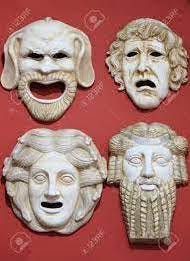
Persona is Latin for mask, actor, or character in a play
For the Greeks, who invented “theater,” and for the Latin-speaking Romans who followed, each character was represented by a mask; (this is the origin of the images still commonly used for theater programs, etc.)
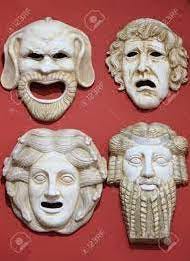
So person entered our language as the term for one who has a social or political role to play, in the sense that each person occupies a position in society, as well as in a family, in a career, and so on
Despite the fact that person has come often to be used as a synonym for “self,” it remains—especially in law—the term for a bearer of rights
The 14th Amendment, for example, having stated that “persons born or naturalized” in the U.S. are citizens, establishes that: No State shall make or enforce any law which shall abridge the privileges or immunities of citizens of the United States; nor shall any State deprive any person of life, liberty, or property, without due process of law; nor deny to any person within its jurisdiction the equal protection of the law
This is one of the best laws ever made, because of the phrase “due process of law"
The reason is that “due process” must be interpreted in the context of each judicial decision
That is, the meaning of any proposed action by the state—that is, by legislation—has to be decided and stated in each case
The first clause—referring to “privileges and immunities”—also demands interpretation; (note that “privilege” literally means “protected by law”)
Indeed, this clause has been the source of many U.S. Supreme Court decisions deciding what “privileges” and “liberties” are implied by the amendment’s words
When I was an undergraduate in 1954, the Court issued the “Brown v Board of Education” decision holding that the provision of “separate but equal” schools (which the former Confederate states had devised to segregate white and black students) was an unconstitutional abridgement of citizens privileges
The court held, in other words, that black students were persons protected by the law established in the constitution
Also under the interpretation of the 14th amendment, the Supreme Court held in Roe v Wade that women are persons whose right to “privacy” in making medical decisions—especially deciding to terminate a pregnancy—was protected by the constitution
In 2022 the court has overruled this decision—in Dobbs v Jackson Women’s Health— on religious grounds, which has had the effect of authorizing states to penalize women for making the personal medical decision to end a pregnancy
Whether or not you approve of this judgment, the Dobbs decision also has the effect of attributing the status of person to the unborn fetus of a pregnant woman
This action poses a question: what role could an fetus play in our social life? What role does it play in the life of the pregnant woman?
The unborn fetus is entirely dependent upon the pregnant woman: its life is an extension of the woman’s life; its survival is a function of her health and nutrition
Thus the needs of the woman define the role of the unborn; the unborn can have no role apart from the pregnant woman’s life
The fact that considerations of “the life and health of the pregnant woman” take precedence over opinions about the morality of abortion reinforces the point that the unborn can play no role apart from the pregnant woman’s survival
Women did not just recently begin to decide whether to bear children: women’s interest in ending pregnancies has ancient historical roots
There is a prime example in the text of the “Hippocratic Oath”—the rules for physicians attributed to the 4th c. Hippocrates [ca. 450BCE - 360BCE]
The “oath"—after enjoining several positive rules patient care—adds two negative commands: the second one reads: δὲ οὐδὲ γυναικὶ πεσσὸν φθόριον δώσω
This command—de oude gynaixi pesson phthorion doso—reads in translation: (I will) “not give a woman a drug to abort a pregnancy”
What does this proscription tell us? It tells us that women routinely sought to end pregnancies in 4th c. Greece
So women have always had an interest in controlling their own lives as mothers
It is because men cannot be sure they are the fathers of the children women bear that men have an interest in controlling the lives of women and have worked to enforce this control
So it is no surprise that the major religions all have rules to restrict access to women, as well as rules to control a woman’s life
These rules, as usual, have entered the several cultures as moral duties governing dress, clothing, sex, children, public behavior, and so on
How much longer should any of us live in societies developed to make men feel safe?