Fascism: Part II
The present challenge

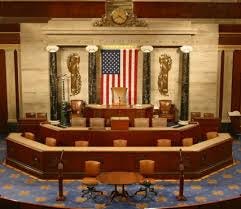
The ornate goldleaf panels on either side of the rostrum of the U.S. House of Representatives (above) are the fasces symbols I wrote about yesterday, testimony to the respect for the ideal of representative government the founders attributed to the Roman republic
But that ideal was hijacked by Mussolini in the 20th c. and turned into a justification for government “one-man rule”
The old name for this political form was “autocracy;” in the 20th c. several forms of it—Stalinism in the USSR, Hitler’s Nazism*, Mao Tse-tung’s Chinese communism, Sung’s North Korean version, etc.—began collectively to be called “dictatorship”
Fascism is a form of dictatorship; but it has several distinctive features which were summarized by Umberto Eco [1932-2016], an Italian professor (semiotics) and novelist who grew up in Mussolini’s regime; he wrote about the experience in a 1995 essay on Ur-Fascism, meaning “Original Fascism”
Eco concludes with a list of features that characterize a fascist regime; here are a selection of them:
Racist fears of difference
Exploitation of individual & social frustration
Obsessive conspiracy theories
Rage at enemies
Life must be struggle
The weak are contemptible
Power is expressed by sexuality
Only the leader has rights
The popular will overrides representative government
It should be clear that my selection from Eco are intended to be relevant to the U.S. presidential administration we’ve endured since 2016; in fact, it’s enough to conclude that we had a homegrown fascist administration
That it did not become a functional dictatorship is not owing to the lack of people willing to support and to serve such a regime; the limiting factor has proved to be the timidity and cowardice of the president: a man willing to provoke, but not to risk anything himself…